Sauce school
What is the Scoville scale?
The Scoville Heat Unit (SHU) is a way to measure how much a pepper is trying to destroy your taste buds. It was invented by Wilbur Scoville, who decided the best way to test spice levels was to dilute pepper extract with sugar water until it stopped hurting—which, honestly, sounds like a wild way to spend an afternoon.
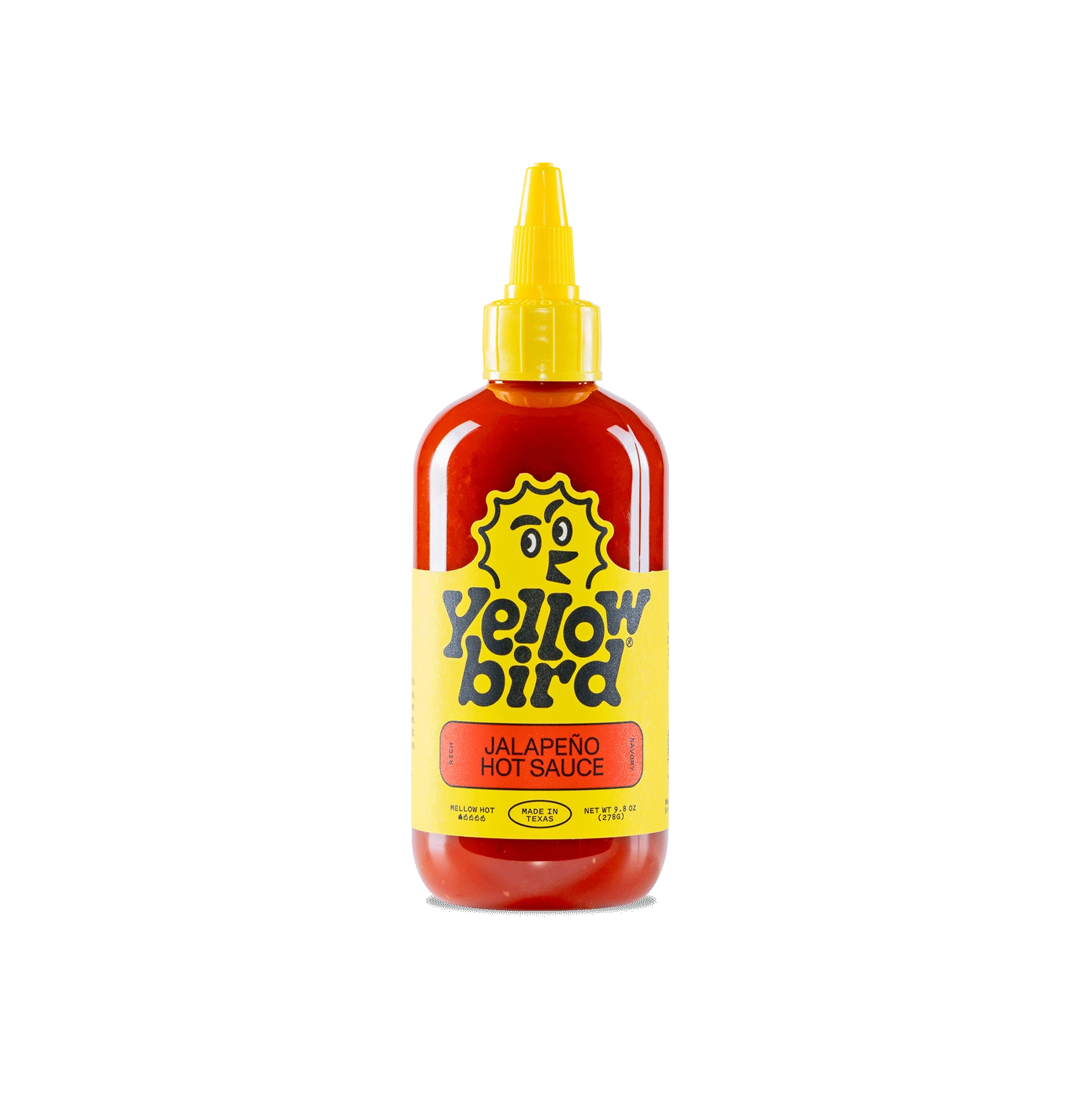
But here’s the thing: Scoville ratings aren’t an exact science. The heat of a pepper can vary depending on how it’s grown, what the weather was like, and if it woke up on the wrong side of the garden that morning. A jalapeño can range from 2,500 to 8,000 SHU, while a habanero can hit anywhere from 100,000 to 350,000 SHU.
At Yellowbird, we believe the best way to gauge heat is with your mouth, not a number. Our sauces are made with real peppers, and that means you might notice some natural variation. So if you’re wondering how hot something is, the best advice we can give you is take a bite and find out. Just maybe have some milk nearby… you know, for science.
How to make hot sauce, by George
Hey, George here! I’m one of the co-founders of Yellowbird and I’m the guy who cooks up all the concepts and recipes for the sauces we make here. People ask me all the time for hot sauce recipes and I usually tell them that you can make hot sauce out of almost anything.
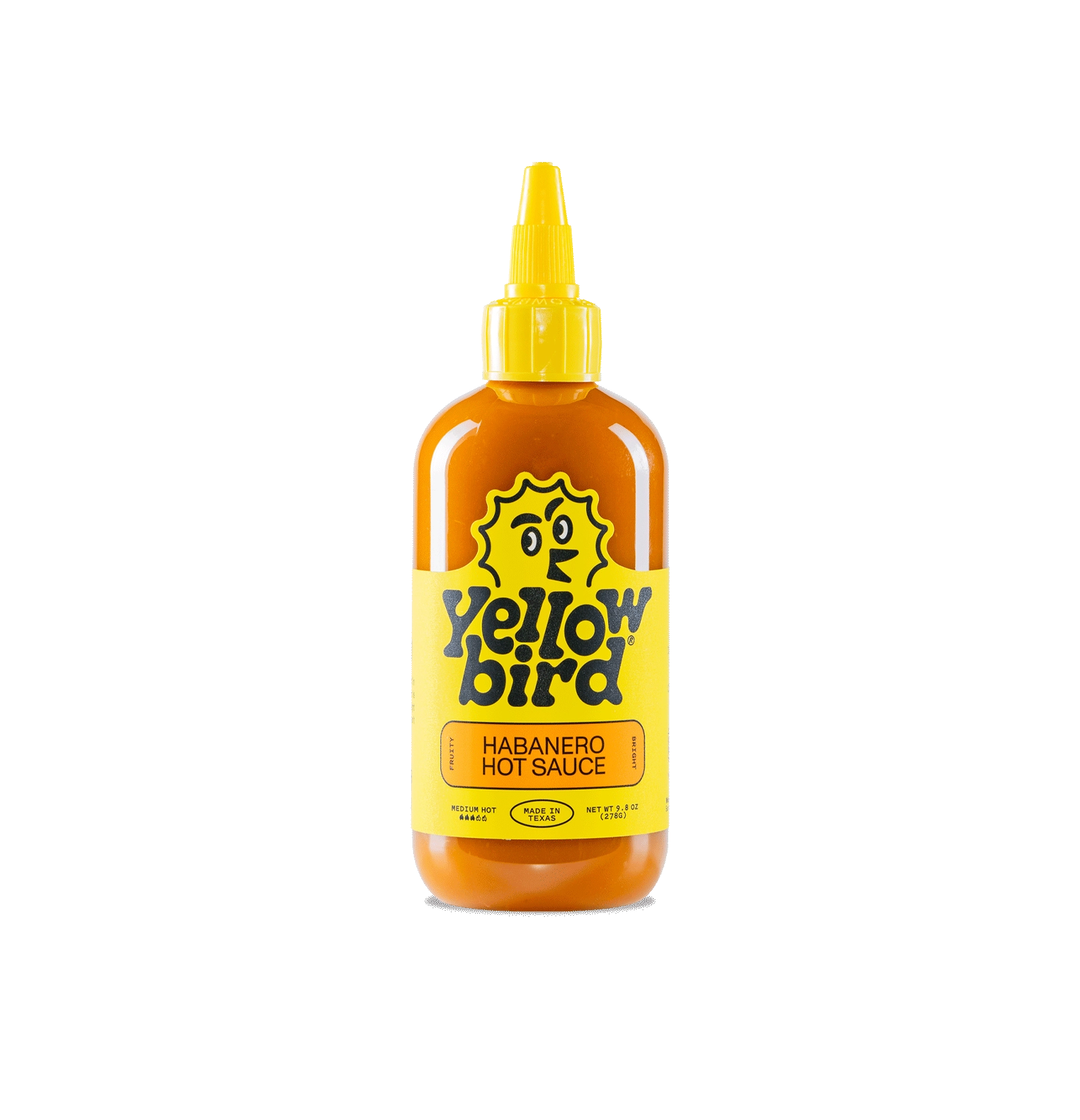
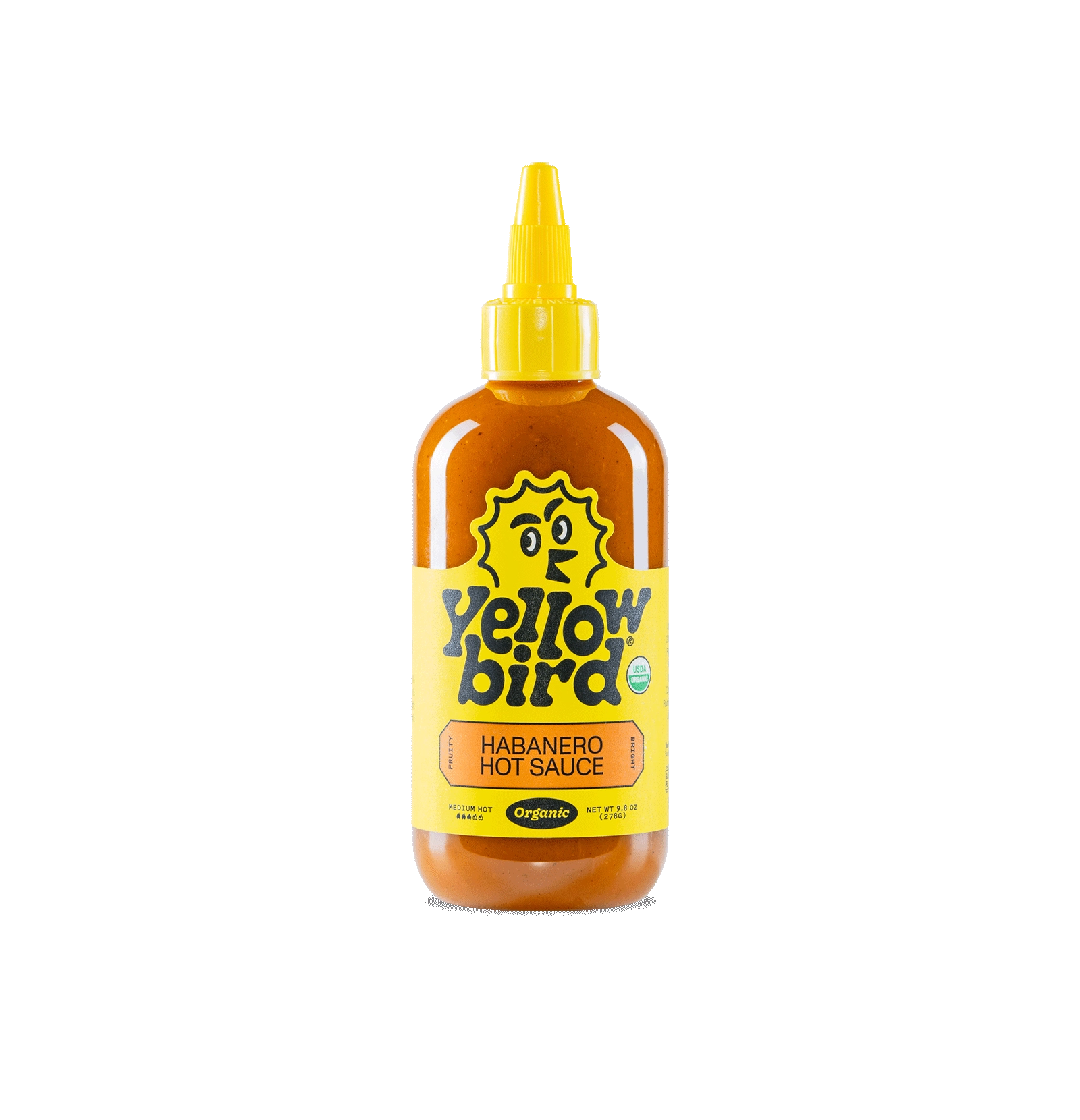
The tools required for hot sauce making are really just a blender, a few empty bottles, and your imagination. For our original and first Yellowbird Sauce flavor, Habanero, I used onions, garlic, carrots, tangerines, and limes.
Hot sauce began very simply as a way of preserving flavorful, spicy peppers. The oldest commercial sauce still in production today is Tabasco, founded in 1868, which is a pretty simple mixture of pepper mash, vinegar, and salt.